
Playing, Singing or Otherwise Experiencing
Experiencing The Nields for the First Time, Again

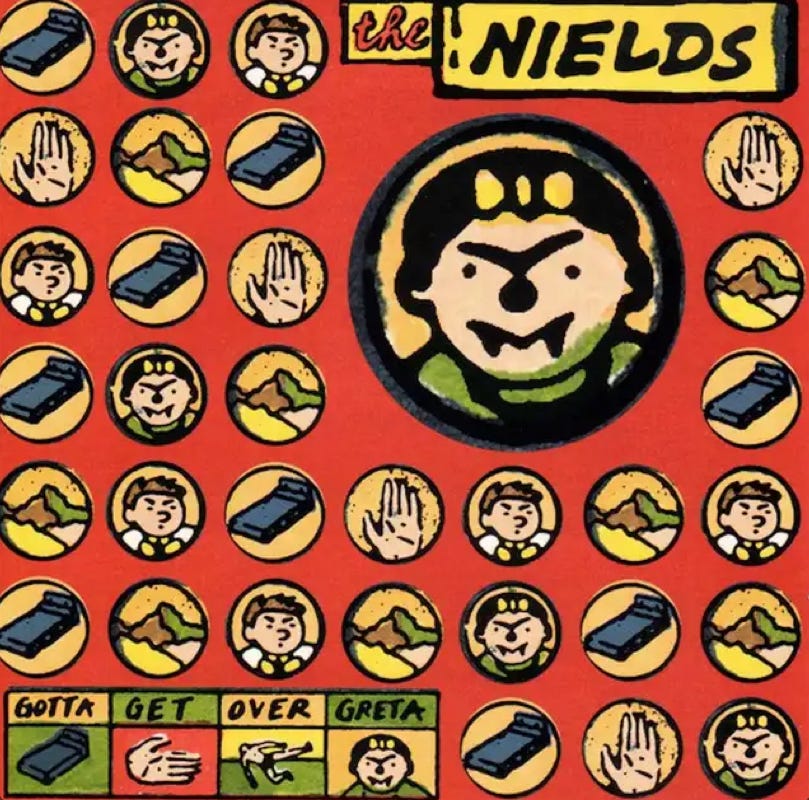
“Do you remember the Nields?” my sister asked me, seconds after answering the phone. “You should go back and listen to the ‘Greta’ album.”
The Nields were a folk-rock five piece based out of New England fronted by two sisters. For a few years in high school, I loved this band. They sang in crystal clear harmonies, and the band had a willingness to veer a bit more toward rock than other folk acts. And, if I’m being honest, I was a teenager and I found Katryna Nields attractive.
But they also weren’t like anything else my friends were listening to. There was a soft honesty and lack of pretension in their music, and having those CDs in my collection made me different. And, in my own mind, cool.
My fandom was cemented in 1999, when my uncle Roger took my sister and me to the Falcon Ridge Folk Festival*. This was a three-day festival in rural New York, and the Nields played the main stage ahead of headliner Ani DiFranco. We camped on a hillside, stayed up late watching drum circles and sneaking joints, and sponging up a community of music that so foreign to my suburban Jersey upbringing. (Amazingly, videos of the Nields’ set and DiFranco’s set at that festival have made their way to YouTube.)
I was far removed from that hillside festival when I called my sister in November of 2020 to see how she was doing after a lonely pandemic Thanksgiving. It was eight months into COVID, and I think we both were in need of some comfort and familiarity.
When we were kids, Thanksgiving meant piling into the back of our mother’s two-door Honda for the drive up to rural Connecticut to visit our uncle Roger. He and his family lived on a hillside, a stream running through their front yard, and a wood-burning stove in the living room.
Roger was — and remains — a committed folkie, and visits to his home usually featured a side quest to a small hall or outdoor street fair with local music. That’s where we’d first heard the Nields, and backtracking to their songs was a welcome respite from the realities of the moment.
But the nostalgia faded quickly, and I was taken aback by how very mature and unvarnished the lyrics were. The Nields sisters were singing about the world as I hadn’t experienced it as a high school kid in Jersey — the yearning disappointment of an affair, developing deep romantic feelings for a friend, or chickening out of something that might do you some good. All of that rang true to me in middle age in a way it couldn’t have when I was younger.
One of the amazing things about music is its ability to shape shift. A song doesn’t change over time, of course — the listener changes. But, a well-crafted song can speak to you in a new voice, or addres some part of you that wasn’t there before.
Later that evening, my sister sent an email to Roger and me:
Sean and I are revisiting the gorgeous Nields album, "Gotta Get Over Greta," on Spotify, and I speak for him when saying that you should too! I recommend starting from the beginning and listening in order.
It's a trip. Want to thank you for the formative musical experiences I wouldn't have had without you.
Love, Kate
Roger was quick with a reply: “Thank you for the shoutout — playing, singing or otherwise experiencing music together is one of life’s joys. I look forward to the opportunity to do it again.”
I never got to go to another show with my sister before she died, some 10 months after that conversation.
But our short time together was soundtracked by shared music experiences. We performed together at a middle school talent show, went to concerts together on our own once I got my driver’s license, and traded mix tapes and burned CDs and playlists throughout our lives.
One of our last conversations was a video call over Facetime. She was teaching me how to play “Yer So Bad,” a Tom Petty song I didn’t yet know. Its pre-chorus contains an ascending/descending melody more sublime than any pop song has a right to.
It took me a while to work up the courage to add it to my repertoire, and I still tear up sometimes while playing it. There’s an undeniable pain in those most meaningful songs in the aftermath of a loss. But on my good days, when I listen long enough, I can rediscover that shared soundtrack and relive the joy she and I shared in playing, singing or otherwise experiencing music together.
Got a little dusty in here. And now I have new music to listen to.
True observation re songs shape shifting over time. Books do also